Robots that move naturally and interact dynamically with the world
- Head of the Elastic Robot Control Group, German Aerospace Center (DLR), Institute of Robotics and Mechatronics
- Assistant Professor (part-time), Eindhoven University of Technology, Department of Mechanical Engineering, Robotics section
I study how robots can move fast, take impacts and work in contact with people and objects without losing stability or breaking. My approach is co-design: mechanics and control designed together, not bolted together, with a controller that exploits the robot's physics instead of fighting it. Compliant actuation is where this work started and what I know best. The questions hold for any actuator: what limits a robot's performance in contact, and how hardware, sensing and control each contribute to that limit.
If you want to combine energy-based modeling and control with machine learning, and see it work on real robots, join us. The role of control is changing fast in the age of AI, and behind all our projects sits a bigger question: what should a controller take from physical laws, and what should it learn from data?
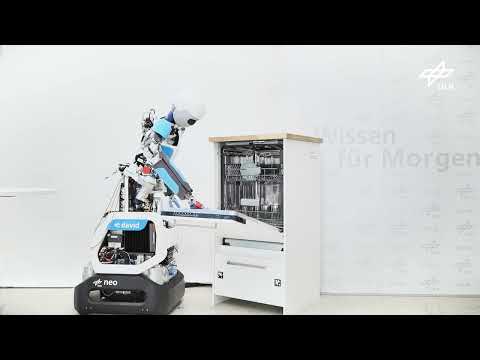
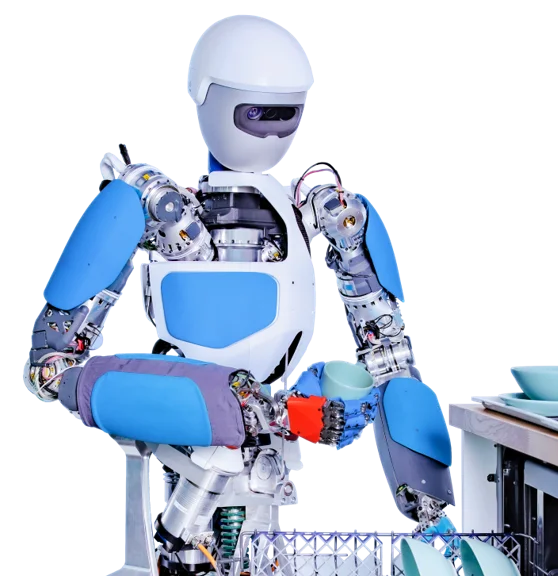 neoDavid
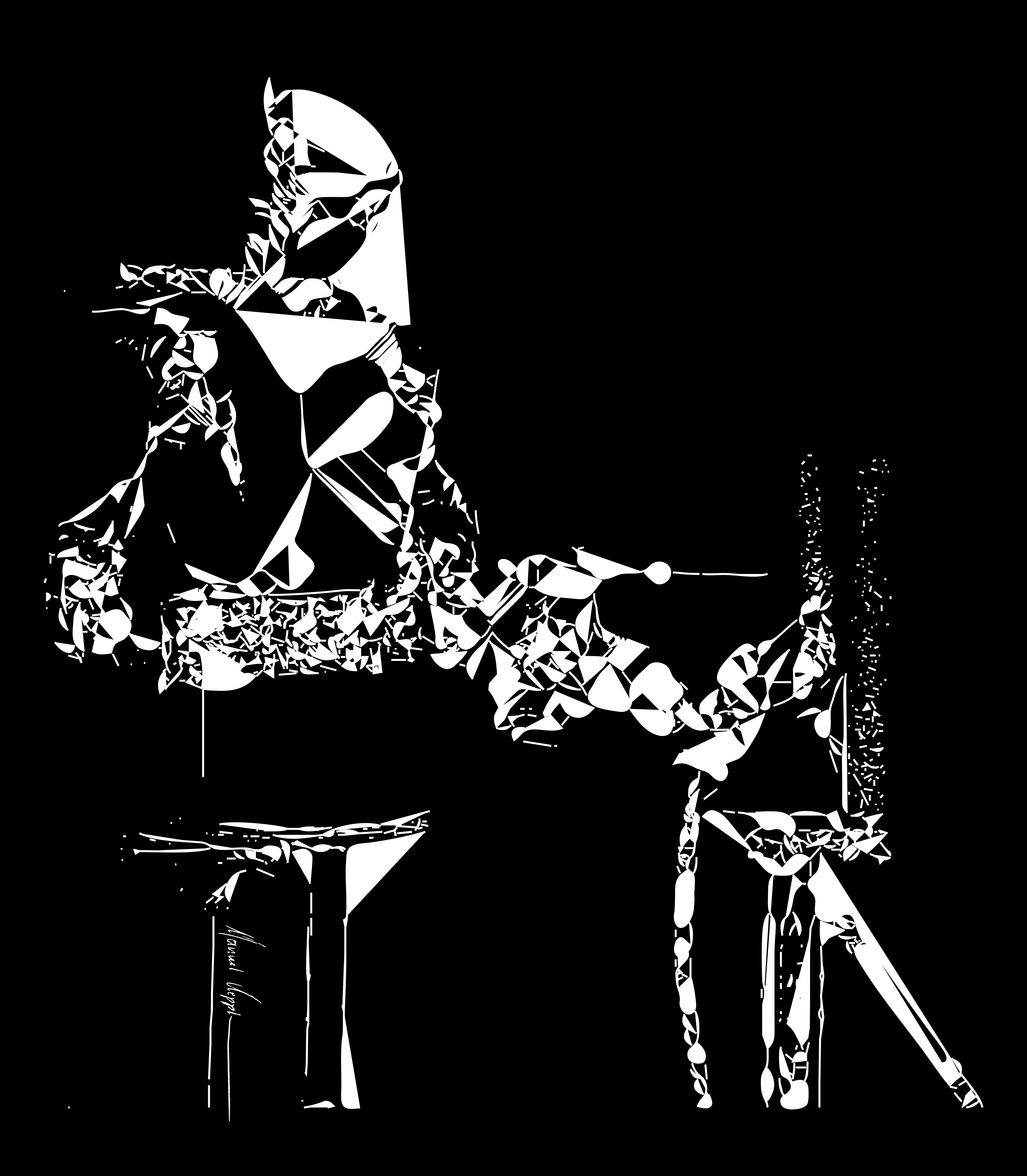
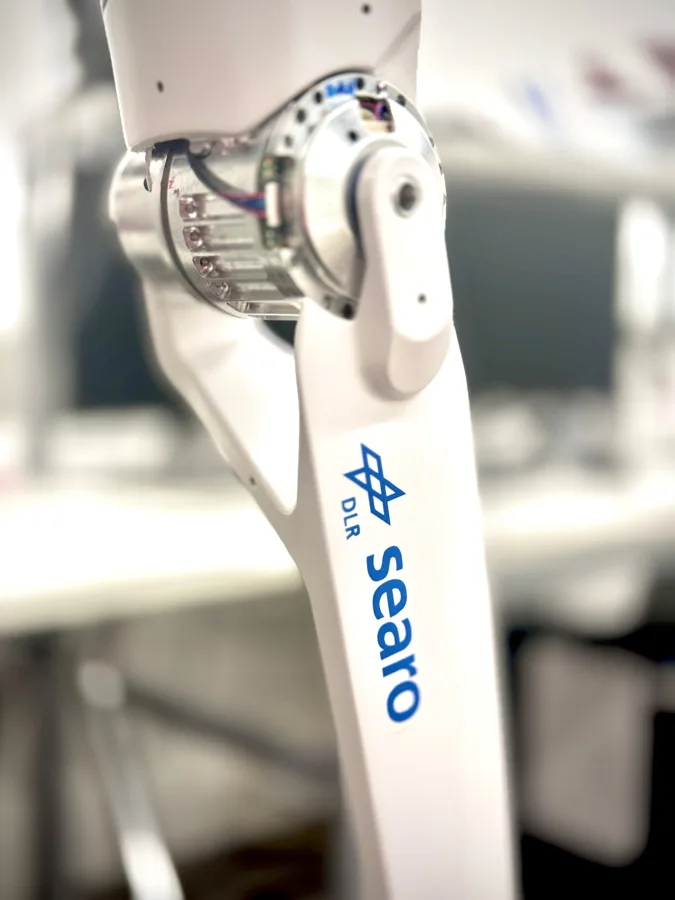 SEARO
SEARO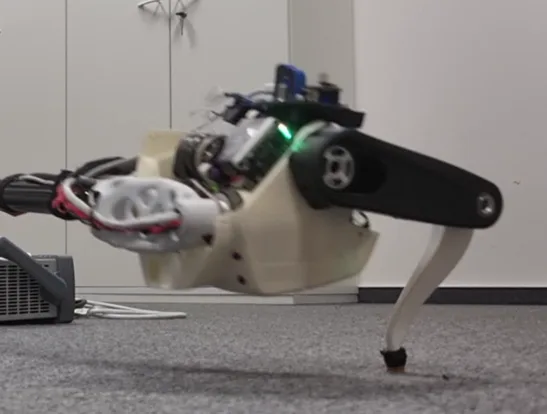 Hoppy
Hoppy


Research
Why compliant robots: hard contact without losing stability
With a rigid actuator, force is a steep function of tiny motions. A hair's width of position error against a hard surface means tens of newtons of force error, and the harder the surface, the more cautious the controller has to be. A spring in the drive train turns force into a gentle function of a large, easily measured deflection, and it absorbs impacts before they reach the gearbox.
The price is that the controller no longer commands the link directly, but through a spring. The usual answer is high-gain feedback that forces the springs to track a prescribed torque. We do the opposite and alter the robot's natural dynamics by the least feedback that gets the job done: a virtual spring toward the desired motion, plus damping. The robot still consists of motors, springs and links, only with a new resting point, so the desired motion becomes its natural motion.
My group develops controllers that change a robot's natural dynamics as little as possible. That only works if the dynamics are useful to begin with, so we also develop the design rules that build them into the hardware. What a robot can achieve is set by its mechanics, sensing and control together, and we treat it as that ensemble.
Learning on top of physics
Learned models and policies adapt to what a model misses, such as friction, contact and wear, but they come without guarantees. Energy-based control gives guarantees, but only as far as the model is right. This is a newer direction for us. We are starting to explore how the two can work together, with the learned part correcting what the model gets wrong while the energy-based structure keeps the closed loop passive. First projects look at learned corrections that preserve passivity, and at learning-based predictive control on top of an energy-based inner loop.
The long-term aim is a co-design method that starts from first principles: what the task demands, what the hardware can do and survive, and what the controller can guarantee. Our hardware started with compliant robots and now goes beyond them.
Selected results
-
An underactuated elastic robot can be treated as if fully actuated
A change of coordinates and inputs turns a class of underactuated Lagrangian systems into quasi-fully actuated ones. Control laws developed for rigid robots then carry over to elastic robots directly.
-
Motion tracking on robots with variable stiffness actuators
Elastic structure preserving (ESP) control adds damping and tracking while keeping the link inertia and the spring as they are. To our knowledge it was the first experimentally validated tracking controller for compliantly actuated multi-joint robots with nonlinear elastic elements.
-
Positioning accuracy at the level of rigid robots
ESP combined with PID control reached 4.5 µrad RMS positioning error on a single elastic joint and 15 µrad on the humanoid neoDavid. On neoDavid that is the physical limit set by its 16-bit position sensors.

Positioning accuracy: PID and ESP control -
Rendered stiffness is not capped by the spring
A series elastic actuator can passively render an interaction stiffness above its own joint stiffness when the damping is designed for it. The result is proven and verified in experiments.

Impedance control beyond the joint stiffness -
Stiffer is not always faster
A closed-form solution for the fastest possible motion of a structure with one flexible mode, and with it a measure of what flexibility costs. Among the results: making a structure stiffer does not always make it faster.
-
A design guide for impact robustness against torque bandwidth
In differential elastic actuators, impact robustness and torque bandwidth compete for the same design choices. This work, led by Anton Shu, turns the trade-off into a guide for choosing the actuator parameters.
-
Reach, grasp, react: in one fluid motion
Finger Flow lets a robot arm and a multi-fingered hand reach and grasp in one continuous movement, and adapt in real time when the object moves. On neoDavid it grasps objects moving faster than 0.7 m/s and handles human-to-robot handovers, with formal guarantees of convergence and finger collision avoidance. Led by PhD student Xuming Meng.

Finger Flow on neoDavid

Robots
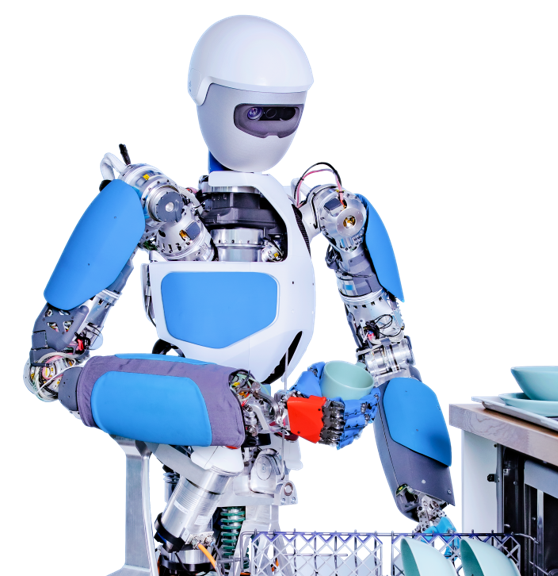
neoDavid is DLR's humanoid with variable stiffness actuators in all 44 joints. I have led its control development since 2019. The same control framework runs every task in these videos.




SEARO
A new arm with four series elastic joints built around composite springs, designed to survive impacts. Publication in preparation.
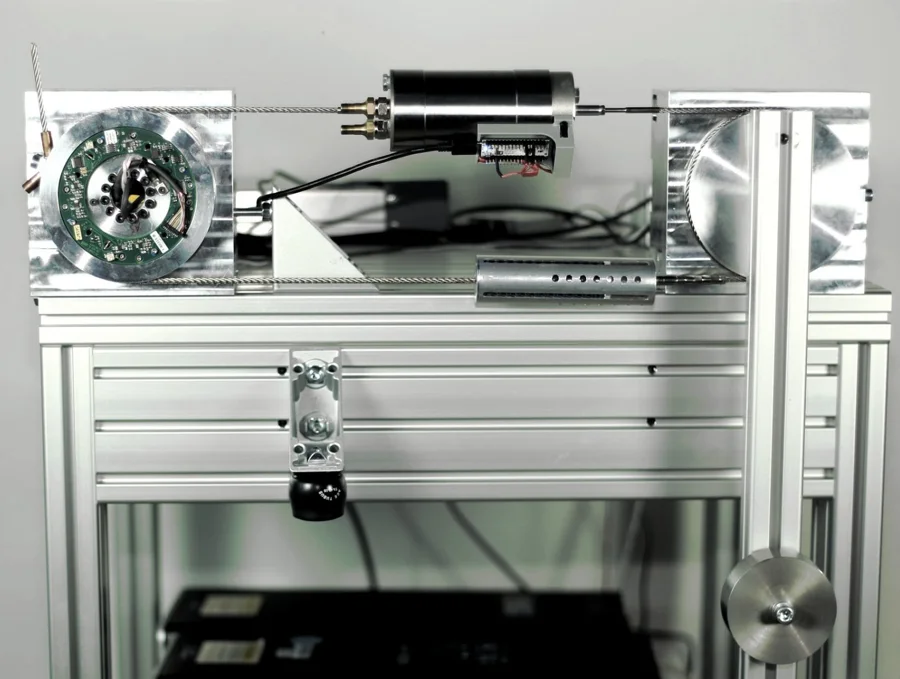
Softy
Our testbed for series elastic and variable viscoelastic actuators, including an impact hammer.
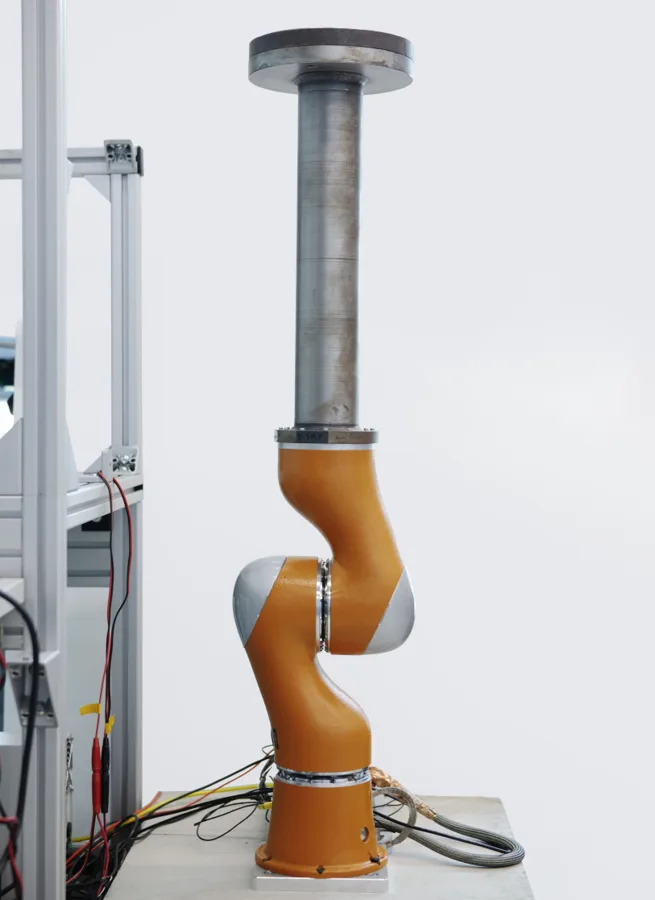
Two-joint testbed
Where we test new control strategies for force-sensitive robots before they go on a full arm.
Hoppy
A teleoperated elastic hopper.


News
- I organised the TC on Robot Control's Special Forum at IROS 2026 in Pittsburgh: Is Robotics Underinvesting in Its Own Foundations?
- Our paper on natural quadruped gaits from nonlinear oscillations, led by Annika Schmidt, is accepted at Nature Machine Intelligence.
- Co-organising the IFAC World Congress 2026 workshop in Busan: Open Challenges and Emerging Opportunities in Robot Control, Part 2.
- neoDavid is on the cover of IEEE Robotics & Automation Magazine. Paper
- Co-organising the ECC 2026 workshop: Open Challenges and Emerging Opportunities in Robot Control, Part 1.
- Xuming Meng defended his PhD thesis and joined Agile Robots SE.
- I joined Eindhoven University of Technology as Assistant Professor in the Robotics section, alongside my role at DLR.
- Researcher in the Spotlight: Shumon Koga, by the TC on Robot Control.
Group
 Bastian DeutschmannPostdoc
 Fabian BeckPhD student
 Clara RaschelPhD student
 David WandingerPhD student
 Arne SachtlerPhD student, co-advised
 Andreas StemmerSenior control engineer






 Alumni. Xuming Meng, PhD 2026, now at Agile Robots SE.
More about the group and how we work
Joining the group. I supervise PhD students at DLR and MSc projects at DLR and TU/e. If you want to work on control or design of robots for contact and impact, write to me with your CV and transcripts.
Contact
manuel.keppler@dlr.de
Institute of Robotics and Mechatronics, German Aerospace Center (DLR), Münchener Str. 20, 82234 Weßling, Germany
I co-chair the IEEE RAS Technical Committee on Robot Control and am an Associate Editor for IEEE Robotics and Automation Letters.